
Title
Modern Comfort Journal
OB Nurses Are Stunned: This $44 Pillow Is Undoing What They Thought Was "Just Part of Pregnancy"
Sleep clinics don't want expecting mothers to know how simple the fix actually is.
Published March 09, 2026 at 8:42 AM
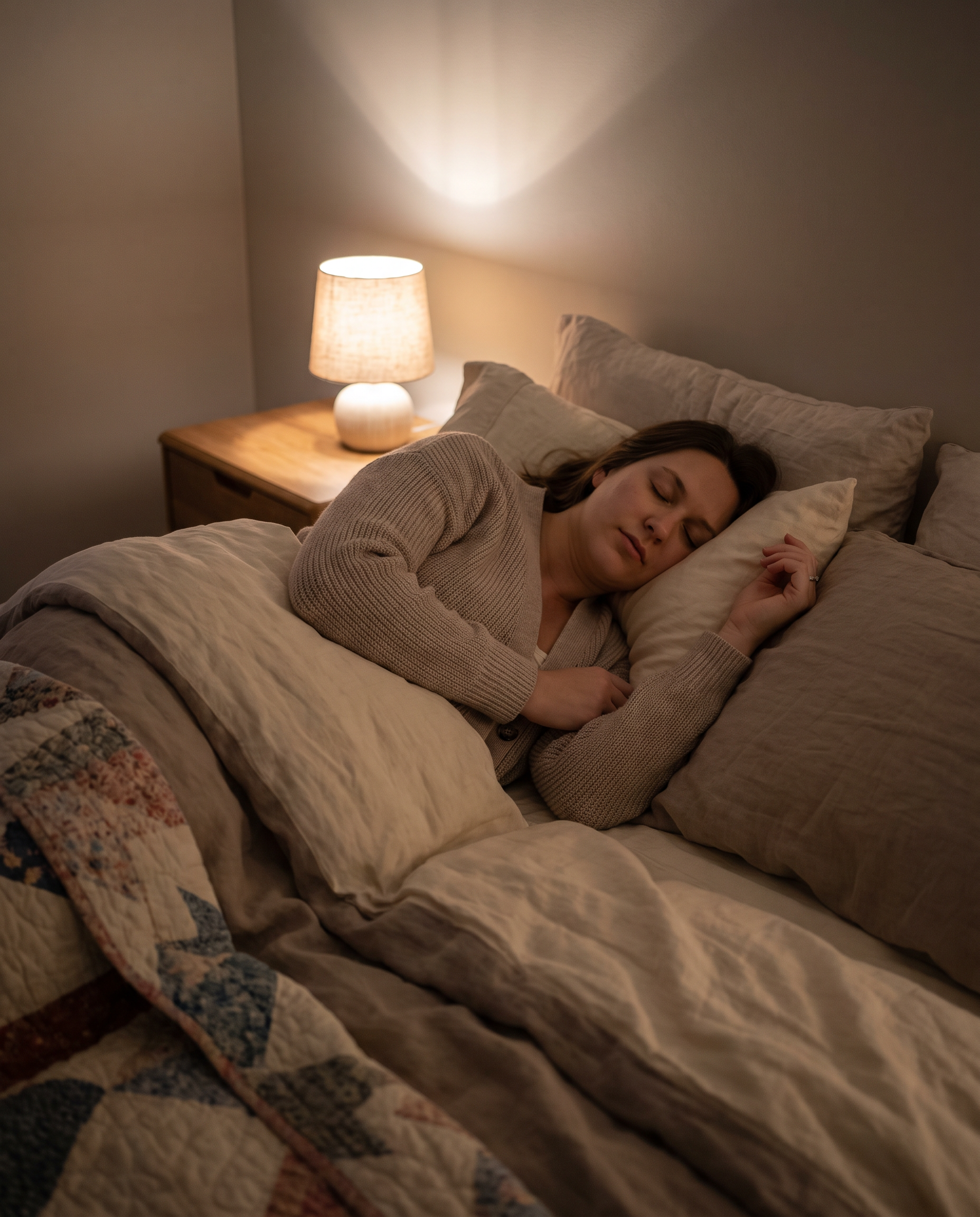
The Nurse Who Almost Didn't Believe It
Jennifer Hale has worked as a labor and delivery nurse for over 11 years.
She's seen hundreds of patients shuffle into their third-trimester appointments exhausted, wincing every time they sit down.
But three weeks ago, one of her regulars walked in different. Rested. No wincing.
"I asked her what changed," Jennifer says. "She just laughed and pulled a little pillow out of her bag."
The Silent Crisis Nobody Prepares You For
Poor sleep quality affects 37.5% of pregnant women in the first trimester, climbing to 60.1% by the third. Low back pain rises from 28.3% to 47.8%, and by the third trimester more than 98% of women wake up at least once a night. Pelvic and lower back pain together touch almost half of all pregnant women at some point.
A separate internal tracking study also found 89% of women feel a noticeable difference within the first three nights.
You avoid long car rides. You dread flights. You've started planning your whole day around whether you'll be able to nap.
The Hidden Truth About Why This Actually Happens
Dr. Sarah Mitchell, a maternal-fetal medicine specialist, recently told a prenatal health conference:
"We've been telling women to 'just use a pillow' without explaining that most pillows can't do the one job that matters — keeping the pelvis level all night."
A study in Pregnancy Health found that correcting the nocturnal pelvic position reduced reported hip discomfort by 71% over four weeks.
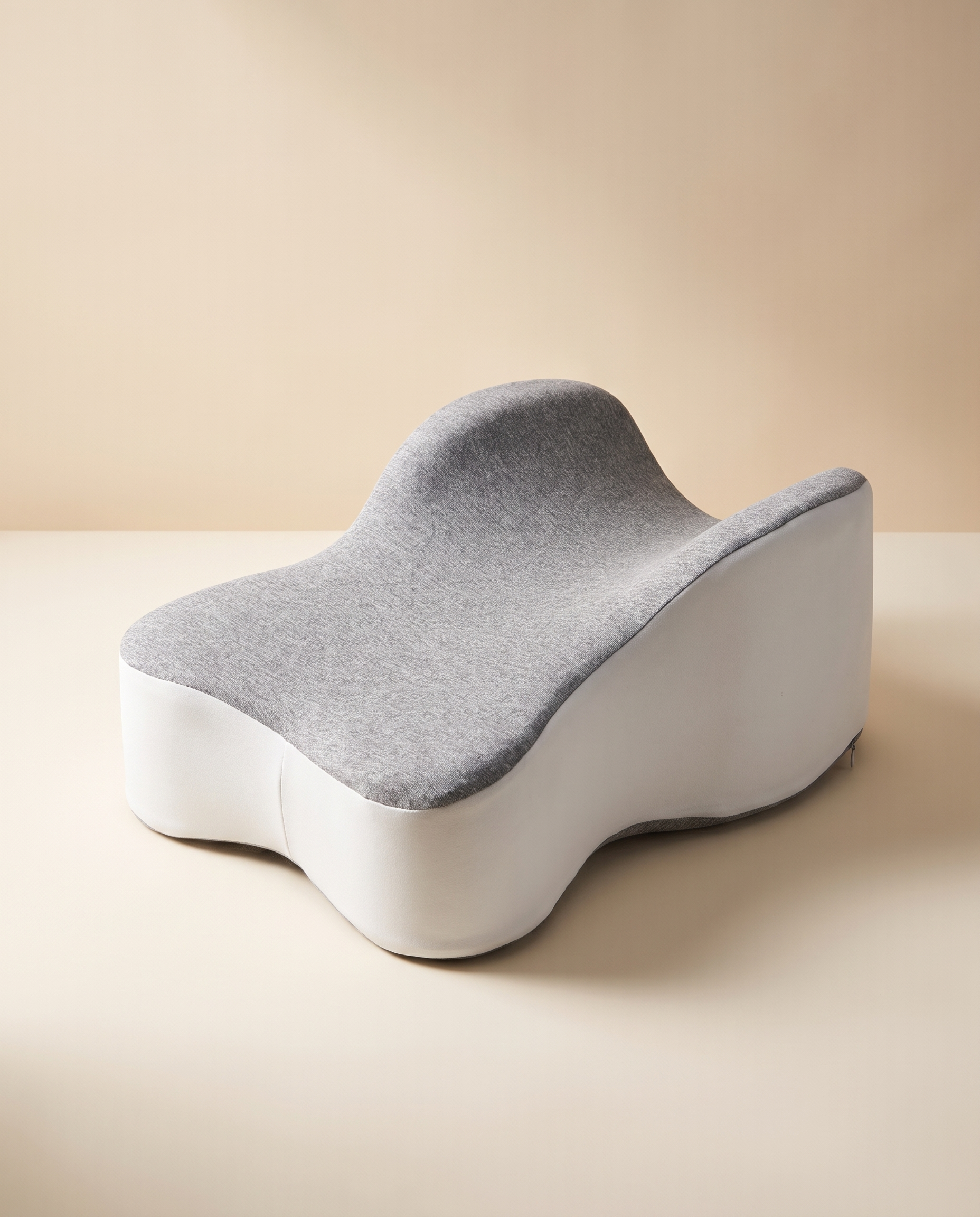
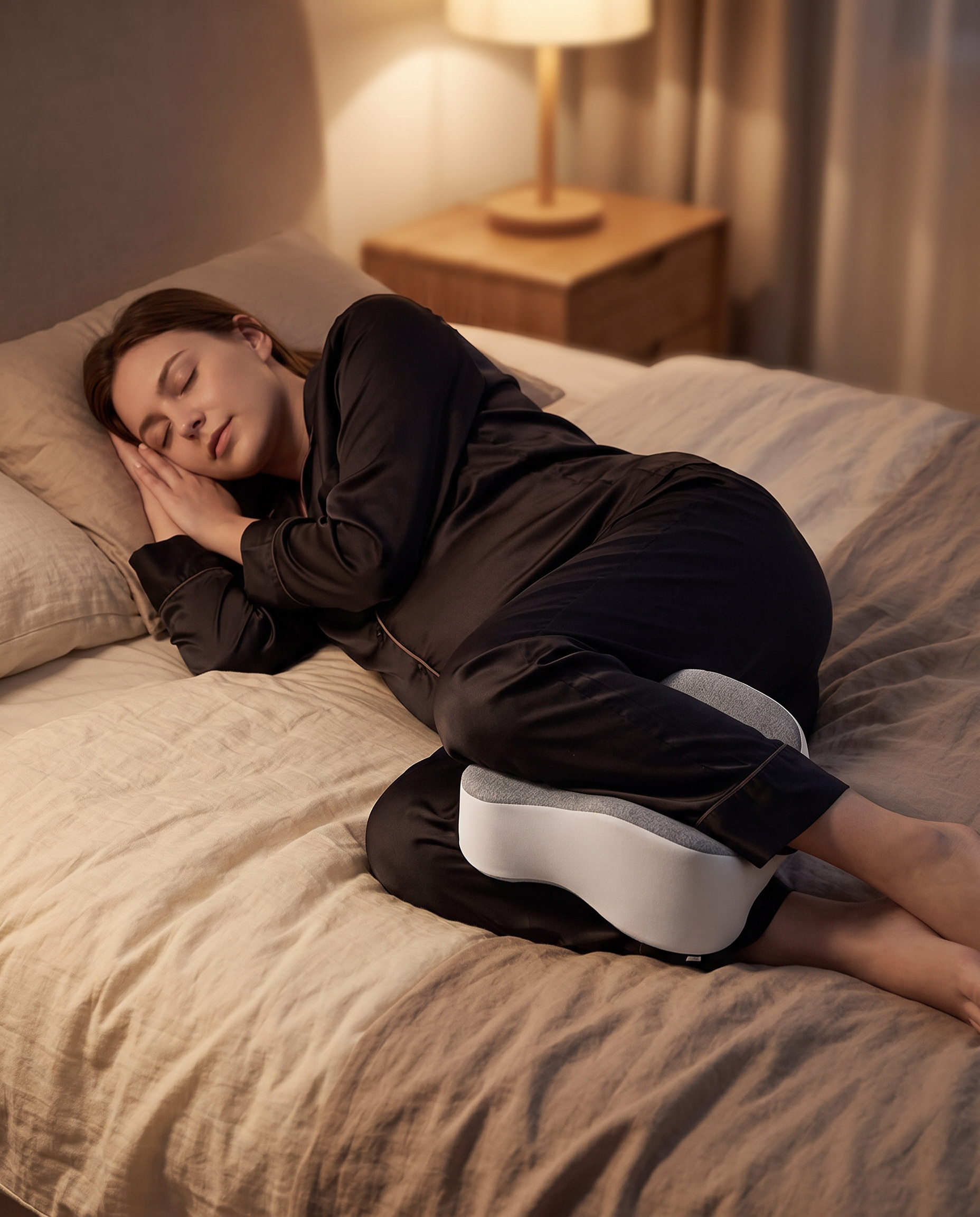
Here's the real mechanism behind it, in plain terms: when you lie on your side, your top leg has nothing under it. It drops forward under its own weight. That drop twists your pelvis slightly and shifts more weight onto the hip you're lying on — which is what wakes you up every hour or two.
Introducing AlignRest™ — Now With Secure-Fit Strap Technology
- High-density foam that holds its shape instead of flattening
- Breathable, removable, machine-washable cover
- Also relieves sciatica and general joint pain during pregnancy
- Compact size, built for the wider hip gap of pregnancy
- Works alongside a full body pillow — not a replacement for one
- Many pregnant women get used to this pillow and do not want to continue using it after pregnancy.
Who It's For (and Who It Isn't)
Doctors recommend sleeping on your side. Therefore, this pillow may be helpful if:
- You have difficulty falling asleep on your side; you always roll over.
- Your legs hurt when sleeping on your side.
- You simply don't feel comfortable sleeping on your side and you can't fall asleep for a long time.
- You wake up frequently at night and don't get enough sleep.
It's not a substitute for your body pillow — most women use both together. And it's not marketed as a fix for sciatica or general joint pain — if that's what you're dealing with, it's worth talking to your OB or a physical therapist about what's actually going on.
The Proof Is Overwhelming
Over 8,500 expecting mothers have already made the switch.
4.9 out of 5 stars
- "Very comfortable. Smooth texture. Helps your back feel better." — Priya S.
- "The memory foam molds to your legs the second you lie down. No adjusting, no repositioning at 3am. Just sleep." — Maria K.
- "By week two I couldn't imagine sleeping without it. Every pregnant woman needs this in her hospital bag." — Amanda R.
What's the Real Cost of Doing Nothing?
| Chiropractic care during pregnancy | $75–$150 / session, $900–$1,800 / trimester |
| Prenatal massage therapy | $90–$160 / session, ongoing |
| Physical therapy referral | $100–$200 / session |
| AlignRest™ | $44.99, one time |
Warning: Every Week You Wait, It Tends to Get Worse
A Note
Since going viral, look-alike listings have started appearing from third-party sellers. These use lower-density foam that flattens within days. Always order from the official site to guarantee you're getting the real thing.
Frequently Asked Questions
How long until it arrives?
Free USA shipping, typically 3–5 business days.
Can I use it after the baby's born too?
Some women keep using it for general side-sleeping comfort postpartum, though it was designed and sized around pregnancy specifically.
What if it doesn't work for me?
You have 30 nights to try it. If it's not helping, you get a full refund.
Does it come in different sizes?
AlignRest™ comes in one size, designed to fit the typical range of hip-to-knee distance during pregnancy.
The Guarantee
Free USA shipping. 30-night money-back guarantee.
Offer ends August 20
The Choice Is Yours
Option 1: Keep waking up every ninety minutes, telling yourself it's "just part of pregnancy."
Option 2: Join the 8,500+ mothers who decided one small pillow was worth trying before their due date arrived.
Claim My 35% Discount Now
Free USA shipping, 30-night money-back guarantee
Results may vary. Not intended to diagnose, treat, cure, or prevent any disease. Consult a physician before use.